Every AI pilot deck has the same slide. Soft gradient background, a confident arrow pointing up and to the right, the word “transformation” appearing at least twice. Leadership nods. Budget gets approved. Champagne, metaphorically speaking, is uncorked.
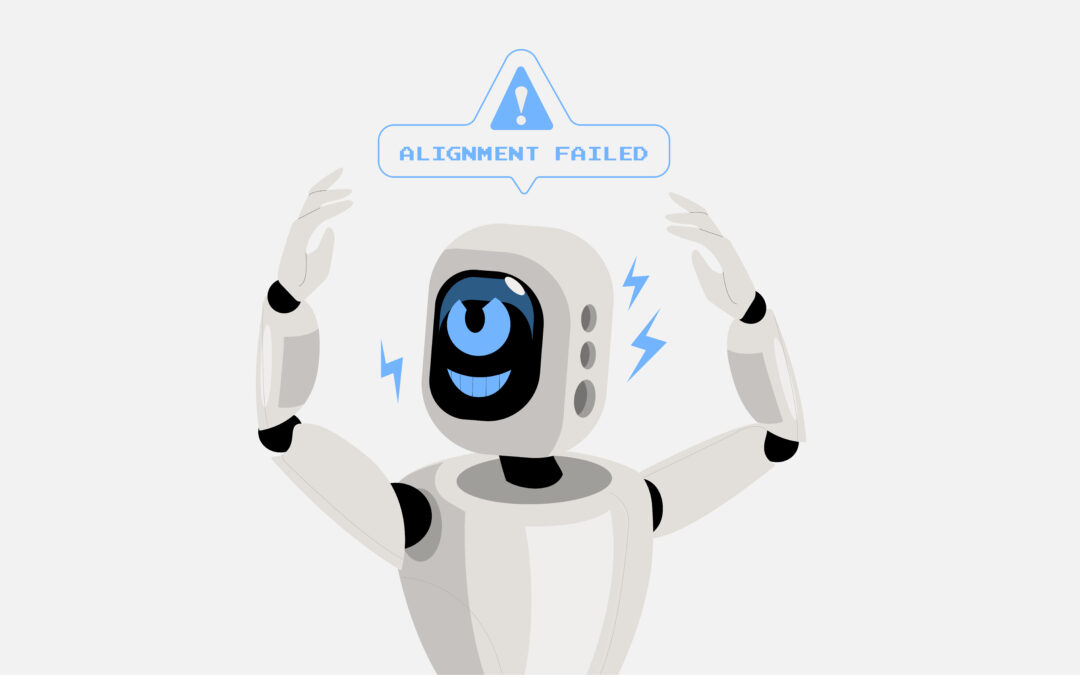
Then the pilot graduates to production, and the arrow stops returning your calls.
You’re not imagining it. You’re living inside one of the most quietly brutal statistics in enterprise tech right now.
The number nobody wants to say out loud
MIT’s NANDA initiative looked at hundreds of enterprise AI deployments and found that roughly 95% of generative AI pilots are delivering no measurable financial return, despite an estimated $30–40 billion in enterprise spending chasing them. Only about 5% make it to something resembling real business impact.
The easy read is that AI is overhyped. The accurate read is messier and a lot more useful: the failure isn’t happening in the model. It’s happening in the handoff between a demo environment and the chaotic, exception-riddled, politically complicated thing we call “actual work.”
Potential is a slide. Production is a system.
Here’s the trap almost every organization falls into: they buy AI on its potential and then act shocked when production reality doesn’t match the pitch. A pilot succeeds in a sandbox because someone curated the data, hand-held the workflow, and quietly cleaned up every edge case before the steering committee saw it. Production has none of those luxuries. It has legacy systems, inconsistent inputs, employees improvising around a tool that doesn’t fit their actual job, and zero patience for a model that forgets everything it learned yesterday.
The agentic reckoning
This is also why agentic AI, the supposed next leap forward, is having its own reckoning. Gartner predicts that more than 40% of agentic AI projects will be cancelled before the end of 2027, citing ballooning costs, unclear value, and weak risk controls. A lot of what’s being sold as “agentic” is what the firm bluntly calls agent washing: existing chatbots and automation tools with a new label and the same old limitations. Impressive demo, forgettable production.
Meanwhile, your employees already found a workaround
The most embarrassing part of the MIT findings isn’t the failure rate. It’s where the actual value is hiding. While official enterprise rollouts stall, employees at the vast majority of these same companies are quietly getting real results from personal AI tools nobody approved or measured. Shadow AI, as it’s called, is often outperforming the official initiative sitting in a steering committee deck. Which raises an uncomfortable question: if your workforce is already proving what works, why is leadership still measuring the wrong things? And more importantly – why is no one investing in building AI workforce capability systematically instead of waiting for employees to figure it out alone?
The fix isn’t a better pilot. It’s a different question.
Stop asking “did people use the tool.” Start asking “are people measurably more capable because of it.” That single shift, from adoption to effectiveness, from potential to production, is the difference between a pilot that graduates and one that quietly gets archived next quarter.
Want to hear this argued out loud? Join Christopher Lind, Visakh, and Cassie Nii on June 25 as they unpack why AI transformation succeeds for a few organizations and stalls for most. The Learning Buzz Episode 9, “The Learning Gap That Nobody Is Talking About,” is live at 10 AM EST. Register free for Episode 9.
Capability, not technology, is increasingly becoming the differentiator in successful AI transformations. The organizations that are getting real returns aren’t buying better tools. They’re building better AI workforce capability from the ground up.
That’s precisely the gap Apposite exists to close. We build the learning architecture – the training, measurement frameworks, and capability infrastructure that turn “it worked in the demo” into “it works on a Tuesday afternoon when three systems are down and nobody’s watching.”
Ready to close your own AI production gap? Get in touch with Apposite and let’s build the capability layer your pilots are missing.