It’s Tuesday Morning
AI generated the content in three seconds.
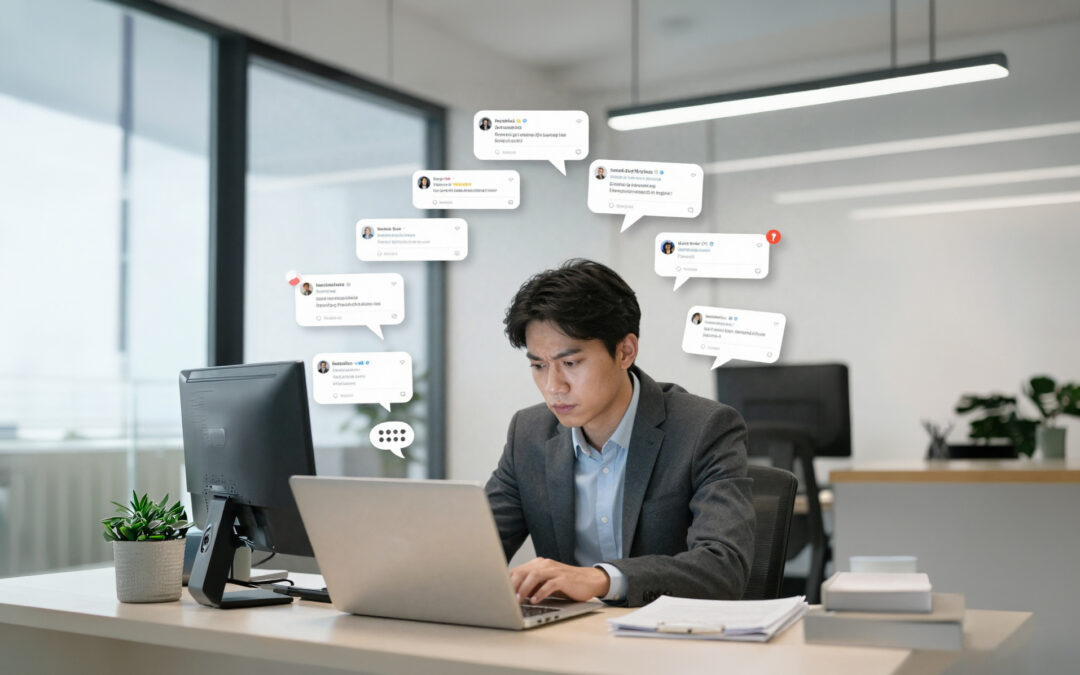
Now your team is buried in a long Slack thread reviewing it. One person is fact-checking. Another is rewriting the tone. Someone else is questioning whether the prompt was misunderstood entirely.
Three hours gone reviewing something that took seconds to create.
That is the gap most organisations missed. They adopted AI faster than they adapted how people work around it.
The Part Nobody Warned Us About
When AI entered everyday work, the promise was simple: less repetitive work, more time for what matters. And the productivity gains are real.
But that time never went back to employees. It went straight into higher expectations: faster turnarounds, more content to review, a higher bar, with the same number of hours and the same human brain.
The result is not a productivity story. It is an employee burnout story. Spring Health’s 2026 Workplace Mental Health Report found that 23% of employees are currently burned out and 51% have been. Nearly three in four people in most organisations have either been there or are there right now. Upwork’s own data shows 88% of top performers are burning out simultaneously with their productivity gains. The people doing the most are breaking down the fastest.
In Indian workplaces, this lands harder. The pressure of late-night messages and weekend availability treated as commitment existed long before AI arrived. AI did not create that culture. It handed leadership a new justification for it. Gallup’s 2026 State of the Global Workplace report found that manager engagement in South Asia dropped eight points in a single year, the largest regional decline in the world, largely because the IT sector cut mid-level roles and survivors absorbed everything that was left.
And underneath the fatigue sits a deeper problem: employees are not burning out because they are working too hard. They are burning out because they are not equipped to do the work. Most organisations are only treating one of those problems.
The Numbers Back This Up
Mental Health First Aid India notes that beyond a certain point, longer working hours stop improving performance altogether. People grow mentally exhausted and lose focus even while putting in more time.
Toxic workplace behaviour, unsustainable workloads, and lack of manager support are among the strongest predictors of burnout at work, none of which AI has solved. In fact, without deliberate intervention, AI can quietly worsen all three.
What Actually Helps
- Build time for reviewing AI work
AI-generated output still needs human judgment. Reviewing, correcting, and refining it is real cognitive work. If organisations want it done properly, they need to plan time for it, not treat it as a quick check. This is a core part of building genuine AI literacy in the workplace.
- Protect focused work
Constant notifications, back-to-back meetings, and endless context switching make deep work nearly impossible. Research from the University of California, Irvine found that it takes an average of over 23 minutes to fully regain focus after an interruption. In a workday filled with Slack messages and meeting alerts, deep thinking rarely gets a real chance.
- Stop rewarding busyness
Being busy is not the same as being productive. The employee who carefully reviewed AI output and caught a critical error may have contributed far more than someone who generated large volumes of unchecked work. That difference needs to be recognised, which means moving away from activity-based metrics toward outcomes-driven performance management.
- Make learning fit into the workday
Long training sessions are increasingly hard to justify in already overloaded schedules. Workplace learning works better when it is shorter, role-specific, and built around what employees are actually dealing with, not pulling them away from work for hours at a time. This is why microlearning for employees continues to grow as a practical approach across modern organisations, particularly in fast-moving sectors navigating AI adoption in the workplace.
Blended learning strategies that combine short on-demand modules with real-time support are increasingly replacing the traditional one-day workshop model, not because it is trendy, but because it fits how people actually retain and apply new skills.
How Apposite Approaches This
We have seen the same pattern appear repeatedly: organisations investing heavily in corporate training programs, yet employees still feeling overwhelmed and unsupported.
The issue is rarely effort. It is almost always learning design.
What that looks like in practice: building AI literacy training into the flow of work, not as a one-off session but as ongoing capability. So, employees know not just how to use AI tools, but how to question them, verify them, and work alongside them without the three-hour Slack thread becoming the norm. That gap between tool adoption and tool fluency is where most organisations are losing time right now.
If your organisation is navigating AI adoption, constant tool changes, or a team trying to keep up without falling apart, get in touch with Apposite today. We will help you build a learning strategy that fits the way your people actually work, without adding more pressure to already demanding days.
The goal was never just to work faster. It was to work better.