
Remember when Operations was the department everyone forgot about until something broke? Those days are over. While the C-suite obsessed over growth hacking and customer acquisition, operations quietly kept the trains running.
Well, modern problems need modern solutions. And operational leaders got one. And it’s pretty great.
Artificial intelligence just turned your operations team into the most strategic function in your entire organization. So, if you’re still treating them like you did last year, you’re about to get lapped by competitors who figured this out six months ago.
Let me tell you the WHY and the HOW because you really might need this now more than ever.
Why it matters now
Volatile demand. Supply-chain chaos that makes 2020 look like a practice round. Labor costs climbing faster than your CFO’s blood pressure. And everyone expects you to make the right call.
Good luck doing that with spreadsheets and gut instinct.
Before you make that call, you need to make a different one and that’s going to save you from all that piercing stares.
What it really means to have AI in Operations
AI enables predictive maintenance that fixes problems before they happen, demand forecasting that borders on mind-reading, scheduling systems that optimize themselves, and quality inspections that never get tired or distracted.
It’s like giving your operations team superpowers. Expensive, data-hungry superpowers, but superpowers nonetheless.
How Fast is it happening (how far behind are you)
44% of manufacturing and supply-chain executives are already piloting or deploying AI. Not thinking about it. Not forming committees. Actually, doing it. In less than 5 years, the AI enabled supply chain market will skyrocket to a solid $15 billion from $2.9 billion in 2023. If you don’t act now, well….you know.
So, if half your competitors are already planning with AI in operations, your “wait and see” strategy is really just a “fall behind” strategy with better branding.
Five Ways in which the magic happens
- Predictive Maintenance: The Art of Fixing Things Before They Break
AI analyses sensor data to predict equipment failures before they happen.
Think about that: your machines tell you they’re about to break down, you schedule maintenance during a planned window, and production keeps humming along.
- Demand Forecasting That Doesn’t Suck
Traditional forecasting models are like weather predictions from last century, vaguely directional, frequently wrong, and useless when you need them most. Machine-learning models do a smart work instead. They feed data based on existing patterns to dramatically reduce both stock-outs and excess inventory.
Your customers get what they want when they want it. Your CFO stops yelling about working capital. Everybody wins.
- Supply-Chain Visibility (Because Flying Blind Is Not a Strategy)
AI-driven control towers synthesize GPS tracking, ERP systems, supplier communications, and weather data in real-time to detect problems early and suggest fixes, rerouting shipments, identifying alternate suppliers and rebalancing inventory.
It’s the difference between discovering your critical shipment is stuck in a blizzard when it’s already three days late versus getting an alert 48 hours in advance with three alternative solutions already queued up.
- Quality Control That Never Blinks
Computer-vision systems inspect products in real-time, catching defects faster and more consistently than any human inspector. Fewer defects mean less scrap, less rework, and dramatically lower warranty costs.
Plus, your quality team can finally focus on root-cause analysis instead of staring at parts until their eyes cross.
- Process Automation That Actually Thinks
AI can now read and process orders, invoices, and shipping documents, even when the formats are messy or different every time. They pull out the important information, check if it’s correct, and enter it into your systems. Typos disappear. Processing time drops. Your team stops copying numbers from one screen to another and starts actually solving problems.
It’s like hiring an intern who never sleeps, never complains, and processes information at superhuman speed. Except you don’t have to teach them how the coffee machine works.
The Catch (Because There’s Always a Catch)
Let’s be honest: AI in operations isn’t plug-and-play. You’re going to run into some very real obstacles:
Your people are skeptical. Skills gaps and cultural resistance are real. Your operations team didn’t sign up to become data scientists, and they’re rightfully nervous about AI making them obsolete (it won’t, but that’s a longer conversation).
Your data is a mess. Fragmented, inconsistent, low-quality data makes training AI models like trying to teach calculus to a goldfish. If your data infrastructure looks like it was designed by a committee of squirrels, fix that first.
Your systems are ancient. Legacy platforms that predate the iPhone don’t play nicely with real-time AI. If your ERP doesn’t have APIs, you’re going to need some middleware magic or a painful upgrade conversation.
Regulators want explanations. Especially in heavily regulated industries, you need model explainability and audit trails. “The algorithm said so” doesn’t fly with compliance teams.
Large scale implementation…not a cakewalk. You have got it all sorted? Great. Now let’s try to maintain it across your enterprise. The real struggle lies in consistent AI implementation.
So, What Should You Actually Do?
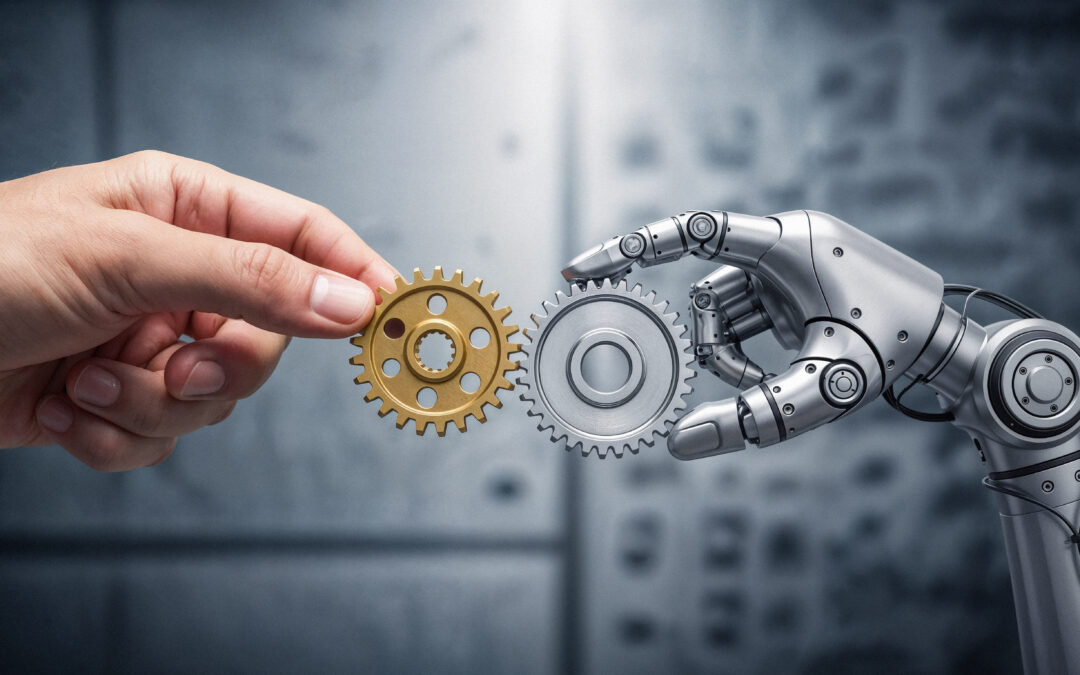
It’s pretty crystal clear that you need to change a lot. The real struggle isn’t bringing in AI. It’s learning to work in an environment where AI is a crucial partner. Adoption is easy. Adaptation is powerful. Your team needs to adapt to the brand-new version of Operations. This is where targeted learning solutions make the difference between AI pilots that fizzle and transformations that stick.
Trying to figure out where to start? Let’s talk. Apposite is here to help you design learning pathways that match your specific operational challenges. We’ll map out exactly what your team needs to learn, in what order, to turn operations into your competitive edge.