The Landscape Has Shifted Overnight
On March 9, 2026, Microsoft announced Copilot Cowork, a new capability within Microsoft 365 that integrates Anthropic’s Claude technology to execute multi-step tasks across Outlook, Teams, Excel, and PowerPoint. This was not an incremental update. It represented a fundamental shift in how the world’s largest productivity suite envisions the role of AI: from assistant to executor.
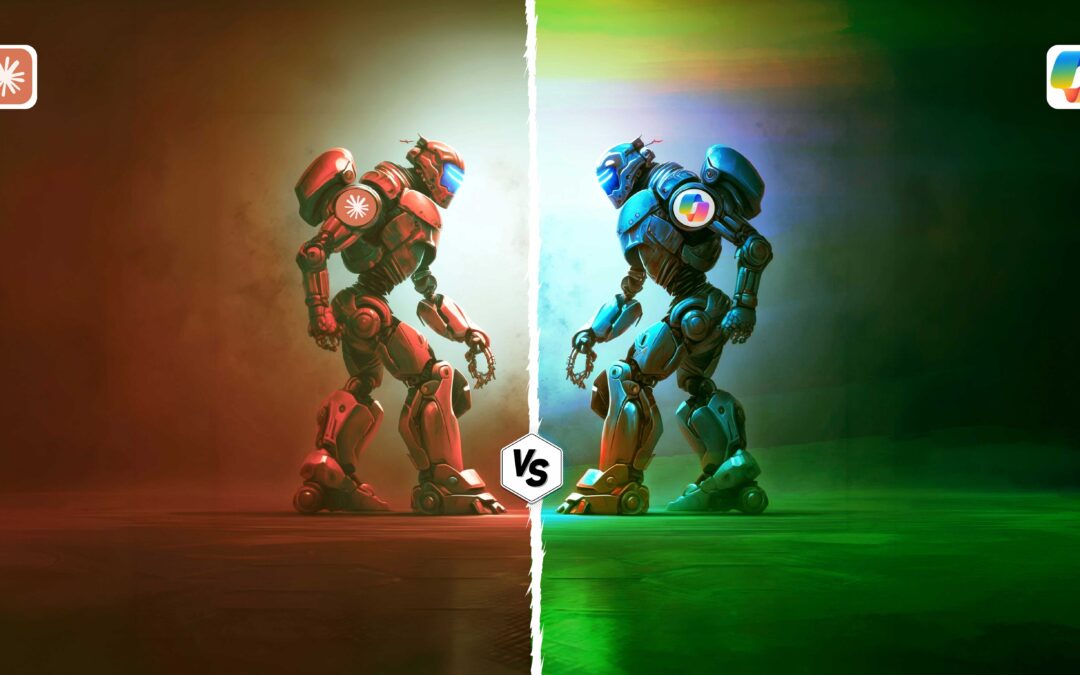
The announcement arrived just six weeks after Anthropic launched its own Claude Cowork, a standalone agentic AI product that rattled SaaS investors so badly that shares of Salesforce, ServiceNow, and Thomson Reuters dropped on the day of its debut. The two products now share an underlying technology, but they represent fundamentally different philosophies of how AI should live in an organization.
For Learning & Development teams, this is not an abstract technology choice. It is a decision about how your function will operate, how your team will create, and what kind of relationship your organization will have with AI infrastructure going forward. This analysis is designed to help you make that decision with clarity.
What Each Product Actually Is
Before comparing them, it is worth dispelling a common confusion: Copilot Cowork and Claude Cowork share the same underlying AI reasoning engine (Anthropic’s Claude model family), and they share the same “agentic harness”—the system that allows the AI to use software tools and operate within guardrails. But they are distinct products, built for different contexts.
Microsoft Copilot Cowork
Copilot Cowork is a cloud-based capability embedded within Microsoft 365. It operates inside your organization’s M365 tenant, which means it runs under your existing security, identity, and compliance policies. Its defining advantage is what Microsoft calls “Work IQ”, a contextual intelligence layer that draws on your Outlook email threads, Teams conversations, calendar history, SharePoint files, and Excel workbooks simultaneously. When Copilot Cowork reschedules a meeting or builds a briefing document, it is pulling from signals across all of those systems at once.
It is currently in limited Research Preview and will become available through Microsoft’s Frontier program in late March 2026. It requires a Microsoft 365 Copilot license, available either as a $30/user/month add-on or as part of the new $99/user/month E7 bundle.
Claude Cowork (Anthropic)
Claude Cowork is a desktop-based agentic AI that runs locally on your computer through the Claude Desktop app (macOS and Windows). Rather than being embedded in a specific productivity suite, it operates on your local file system. You point it at a folder, describe an outcome, and it plans, executes, and delivers—producing polished Word documents, Excel spreadsheets, PowerPoint presentations, and formatted reports directly as files on your machine.
Its enterprise integration comes through a growing ecosystem of connectors (Google Drive, Gmail, Slack, DocuSign, FactSet, and more) and a plugin architecture that allows organizations to build private marketplaces of department-specific AI agents. It is available on all paid Claude plans: Pro ($20/month), Max ($100–200/month), Team ($30/user/month), and Enterprise.
The Core Distinction
Copilot Cowork is AI embedded in your existing infrastructure. Claude Cowork is AI as independent infrastructure. This distinction has profound implications for flexibility, lock-in, cost, and the kind of work each tool does best.
Head-to-Head: What Matters for Enterprise and L&D
|
Dimension |
Microsoft Copilot Cowork |
Claude Cowork (Anthropic) |
|
Runs Where |
Cloud, inside your M365 tenant |
Locally on your desktop (macOS/Windows) |
|
Context Source |
Work IQ: pulls from Outlook, Teams, SharePoint, Calendar, Excel simultaneously |
Local files + connectors to Google Drive, Gmail, Slack, DocuSign, and 10+ enterprise tools |
|
Task Execution |
Multi-step tasks across M365 apps: rescheduling, deck-building, email drafting, data assembly |
Multi-step tasks on local files + connected services: research, document creation, data analysis, file organization |
|
Enterprise Security |
Inherits M365 identity, permissions, compliance policies. Auditable by default. |
Runs locally; enterprise controls via Team/Enterprise plans. Cowork history stored locally, not in Anthropic’s data retention. |
|
Customization |
Copilot Studio for building agents; M365-bound. Agent 365 for governance. |
Plugin marketplace (stock + custom), private org-level marketplaces, folder-specific instructions, MCP connectors. |
|
Pricing |
$30/user/month (Copilot add-on) or $99/user/month (E7 bundle with Entra, Agent 365) |
$20/month (Pro), $30/user/month (Team), $100–200/month (Max), Enterprise (custom) |
|
Maturity |
Research Preview (March 2026). Broader Frontier access late March. GA timeline unclear. |
Research Preview since Jan 2026. Rapid iteration cycle (built in 2 weeks with Claude Code). Plugins and connectors expanding fast. |
|
Model Flexibility |
Multi-model: routes tasks to OpenAI or Claude models automatically. User does not choose. |
Single model family: Claude Opus 4.6 / Sonnet 4.6. User has direct relationship with the model. |
|
Ecosystem Lock-in |
Tightly coupled to M365. Greatest value if you are deeply invested in Microsoft’s productivity stack. |
Tool-agnostic by design. Works across Google Workspace, Office files, Slack, and local applications via MCP. |
What This Means Specifically for L&D
The comparison above serves any enterprise function. But Learning & Development teams face a specific set of considerations that deserve direct attention. L&D work is a unique blend of creative design, project coordination, content production, stakeholder management, and data-informed iteration. No single AI tool will serve all of these equally. The question is which platform creates the most leverage for the work your team actually does.
Where Copilot Cowork Has the Edge for L&D
Organizational context at scale. If your L&D function operates primarily within Microsoft 365—using Teams for stakeholder communication, SharePoint for content repositories, Outlook for project coordination, and Excel for training metrics—Copilot Cowork’s Work IQ layer gives it a contextual advantage that standalone tools cannot match. It can prepare for a training needs analysis meeting by pulling from your last quarter’s email threads, stakeholder Teams conversations, and shared drive documents simultaneously.
Governance and compliance. For L&D teams in regulated industries (financial services, healthcare, energy), Copilot Cowork’s native integration with Microsoft’s identity, permissions, and compliance infrastructure is significant. Every action is auditable. Content stays within the organization’s data boundary. For teams building well control training for the drilling industry or compliance modules for pharmaceutical sales forces, this matters.
Adoption path. If your organization already has Copilot licenses, Copilot Cowork arrives as a capability upgrade rather than a new tool procurement. For L&D leaders who need to demonstrate AI value without asking for new budget lines, this is a practical advantage.
Where Claude Cowork Has the Edge for L&D
Creative and instructional design quality. Claude’s reasoning capabilities are particularly strong for the kind of nuanced, context-sensitive writing that instructional design demands. When you need to develop a Concept–Consequence–Control framework for a technical training module, or craft scenario-based learning that requires subject matter depth and pedagogical judgment, the direct relationship with Claude’s model without intermediary routing or abstraction produces stronger results. You are working with the model, not through a platform that selects a model on your behalf.
Speed of iteration and tool-agnostic workflows. L&D teams rarely work within a single ecosystem. You might author in Articulate Storyline, manage projects in Monday.com, collaborate with SMEs in Google Docs, store assets in SharePoint, and deliver through a third-party LMS. Claude Cowork’s connector and plugin architecture is designed precisely for this kind of heterogeneous workflow. It can pull a brief from Google Drive, produce a storyboard document locally, create a PowerPoint deck, and output structured content—all without requiring everything to live inside Microsoft’s walls.
Cost structure for small and mid-sized teams. An L&D team of 10–15 people at a learning solutions company does not need—and likely cannot justify—$30–99 per user per month for Microsoft Copilot. Claude’s Team plan at $30/user/month or even individual Pro plans at $20/month provide access to the same underlying AI capabilities (and arguably more direct control over them) at a fraction of the cost for organizations that are not already deep in Microsoft’s enterprise stack.
Rapid evolution. One of the more telling details about Claude Cowork is that Anthropic’s team built it in approximately two weeks using their own Claude Code tool. That development velocity is reflected in the product’s iteration cycle: connectors, plugins, and capabilities are expanding rapidly. Ethan Mollick, a prominent AI researcher at Wharton, raised this directly about Microsoft, noting its “tendency to launch a leading product and then let it sit for a while.” For L&D teams that need to stay at the frontier of what AI can do for learning design, the speed of the underlying platform matters.
The Bias Check: What Neither Vendor Will Tell You
Any honest analysis of these platforms should surface the assumptions and incentive structures that shape how they are marketed, because those assumptions quietly shape how organizations make decisions.
Microsoft’s framing assumes the productivity suite is the center of gravity. Microsoft’s entire narrative—from Work IQ to the E7 bundle—is built on the premise that your relationship with AI should be mediated through your existing Microsoft subscription. This is a commercial strategy as much as a technical one. The E7 tier bundles Copilot, identity management, and agent governance into a single SKU at $99/user/month—a 65% increase over E5. The implicit message is that AI capabilities should be inseparable from your productivity infrastructure. But only 3.3% of Microsoft 365 users who interact with Copilot Chat actually pay for it. The gap between Microsoft’s vision and actual enterprise adoption suggests the value proposition is not yet self-evident to most organizations.
Anthropic’s framing assumes the model is the center of gravity. Anthropic’s narrative positions Claude as the indispensable reasoning layer—the intelligence that should sit at the center of your workflows regardless of which tools you use. This is also a commercial strategy. The plugin and connector architecture is elegant, but it places Claude (and Anthropic’s subscription revenue) at the hub of your organization’s AI infrastructure. If Anthropic’s pricing changes, or a competitor’s model surpasses Claude, you are equally locked in—just to a model provider rather than a platform vendor.
The “agentic AI” narrative itself deserves scrutiny. Both vendors are selling the vision of AI that acts on your behalf—scheduling, drafting, researching, producing. But Anthropic’s own head of Americas acknowledged that 2025 “was meant to be the year agents transformed the enterprise, but the hype turned out to be mostly premature.” Both Copilot Cowork and Claude Cowork are in research preview. Neither has proven enterprise-scale reliability. CIOs and L&D leaders should be cautious about building core workflows around capabilities that are still being tested.
A Question Worth Asking
Before choosing a platform, ask: Are we buying AI capability, or are we buying a vendor’s vision of where AI should live in our stack? The answer to that question should drive your decision more than any feature comparison.
A Decision Framework for L&D Leaders
Rather than prescribing a single answer, here is a framework for thinking through the decision based on your team’s actual context.
Choose Copilot Cowork When:
- Your organization is deeply embedded in M365 and your L&D workflows run primarily through Teams, SharePoint, and Outlook.
- Enterprise compliance and auditability are non-negotiable requirements (regulated industries, government, healthcare).
- Your organization already has or is budgeting for Copilot licenses, and you want to maximize return on that existing investment.
- The primary AI use case is coordination and logistics (meeting prep, stakeholder updates, calendar management, status reporting) rather than creative design.
Choose Claude Cowork When:
- Your L&D team works across multiple tools and ecosystems (Articulate, Google Workspace, Slack, third-party LMS), and you need AI that is not tethered to one vendor.
- The primary AI use case is content creation, instructional design, research synthesis, and the kind of nuanced writing that requires strong reasoning and contextual judgment.
- You are a small to mid-sized L&D team or a learning solutions provider that needs enterprise-grade AI without enterprise-grade pricing.
- You want direct control over which AI model you use and how it behaves, rather than having a platform route your tasks to models automatically.
- Speed of innovation matters: you want to be on the platform that is iterating fastest and incorporating frontier capabilities first.
Consider Both (Or Wait) When:
- Your organization is large enough to run parallel pilots, with Copilot Cowork for operations/coordination and Claude Cowork for design/production.
- Both products are still in research preview. If your workflows are running well today, there is no penalty for waiting until Q3 2026 when both will have broader availability and clearer enterprise track records.
- You are exploring the question not as a tool purchase but as an organizational strategy for AI-assisted work—in which case the decision should be informed by a broader transformation roadmap, not a feature comparison.
The Deeper Question
Behind every platform comparison lies a more fundamental question that L&D leaders should be asking: What is the role of AI in our function and who controls it?
If AI is primarily a coordination tool, helping you manage calendars, prep for meetings, and assemble status reports—then the platform that is most deeply embedded in your existing infrastructure will win. That is Microsoft’s bet.
If AI is primarily a thinking tool, helping you reason through learning architectures, synthesize research, design assessments, and produce content that requires judgment and nuance—then the quality and directness of your relationship with the model matters more than where it lives. That is Anthropic’s bet.
For most L&D teams, the honest answer is that AI is both. The organizations that will get the most value from this moment are those that resist the temptation to collapse the decision into a single vendor choice, and instead build a strategy that uses the right tool for the right kind of work.
The worst outcome is not choosing the wrong platform. The worst outcome is letting a licensing decision make your AI strategy for you.